递归学习

Recursive summary

image-20201008211113886

<1>递归概念

函数调用自身,称为递归

<2>递归的条件

  • 递归特性一:必须有一个明确的结束条件
  • 递归特性二:每次递归都是为了让问题规模变小
  • 递归特性三:递归层次过多会导致栈溢出

<3>使用递归求1+11+111+1111+11111的值

1
2
3
4
5
6
7
8
9
10
11
12
13
14
15
16
17
18
19
20
21
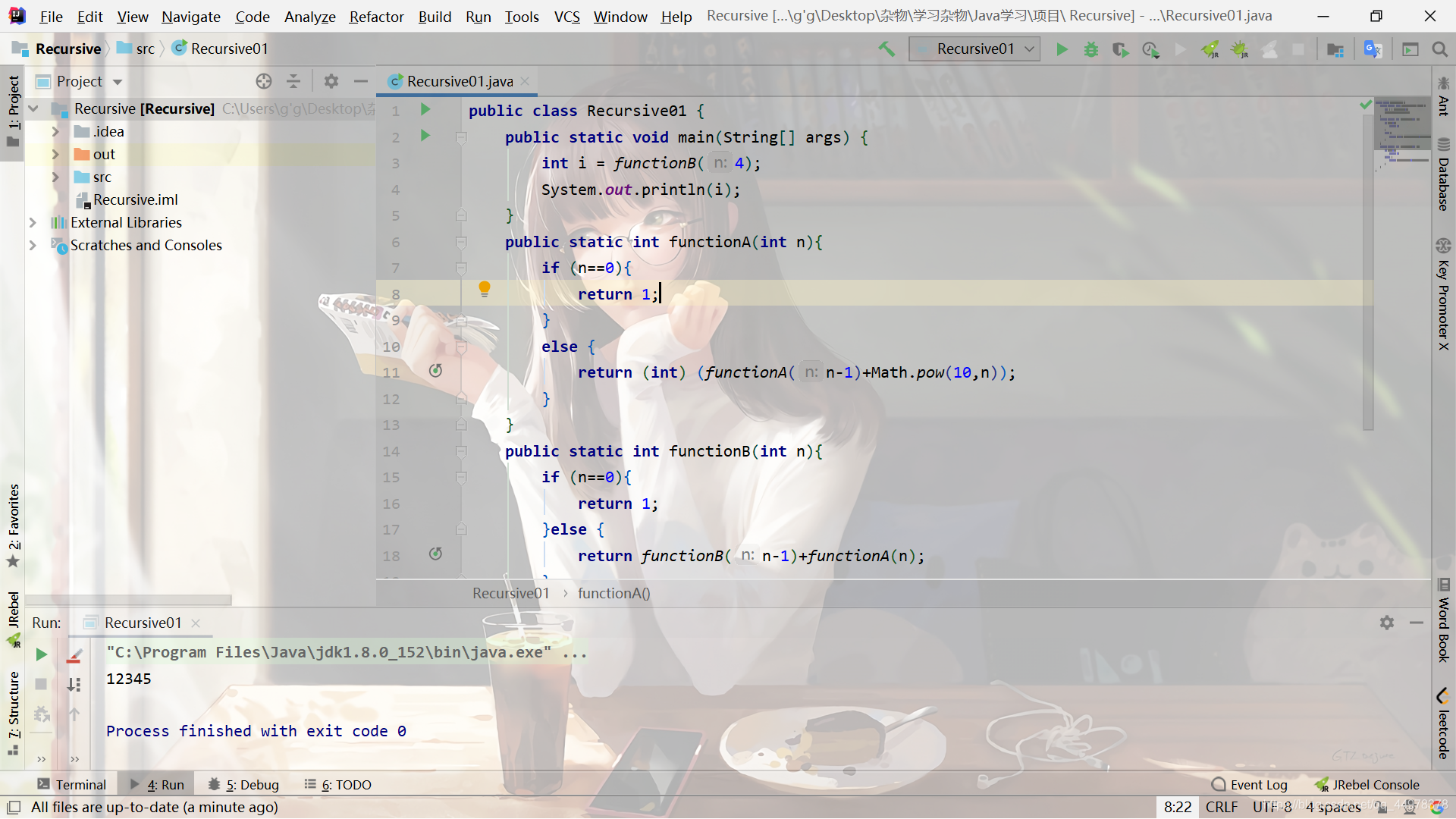
public class Recursive01 {
public static void main(String[] args) {
int i = functionB(4);
System.out.println(i);
}
public static int functionA(int n){
if (n==0){
return 1;
}
else {
return (int) (functionA(n-1)+Math.pow(10,n));
}
}
public static int functionB(int n){
if (n==0){
return 1;
}else {
return functionB(n-1)+functionA(n);
}
}
}

在这里插入图片描述

<4>递归求n!

1
2
3
4
5
6
7
8
9
10
11
12
13
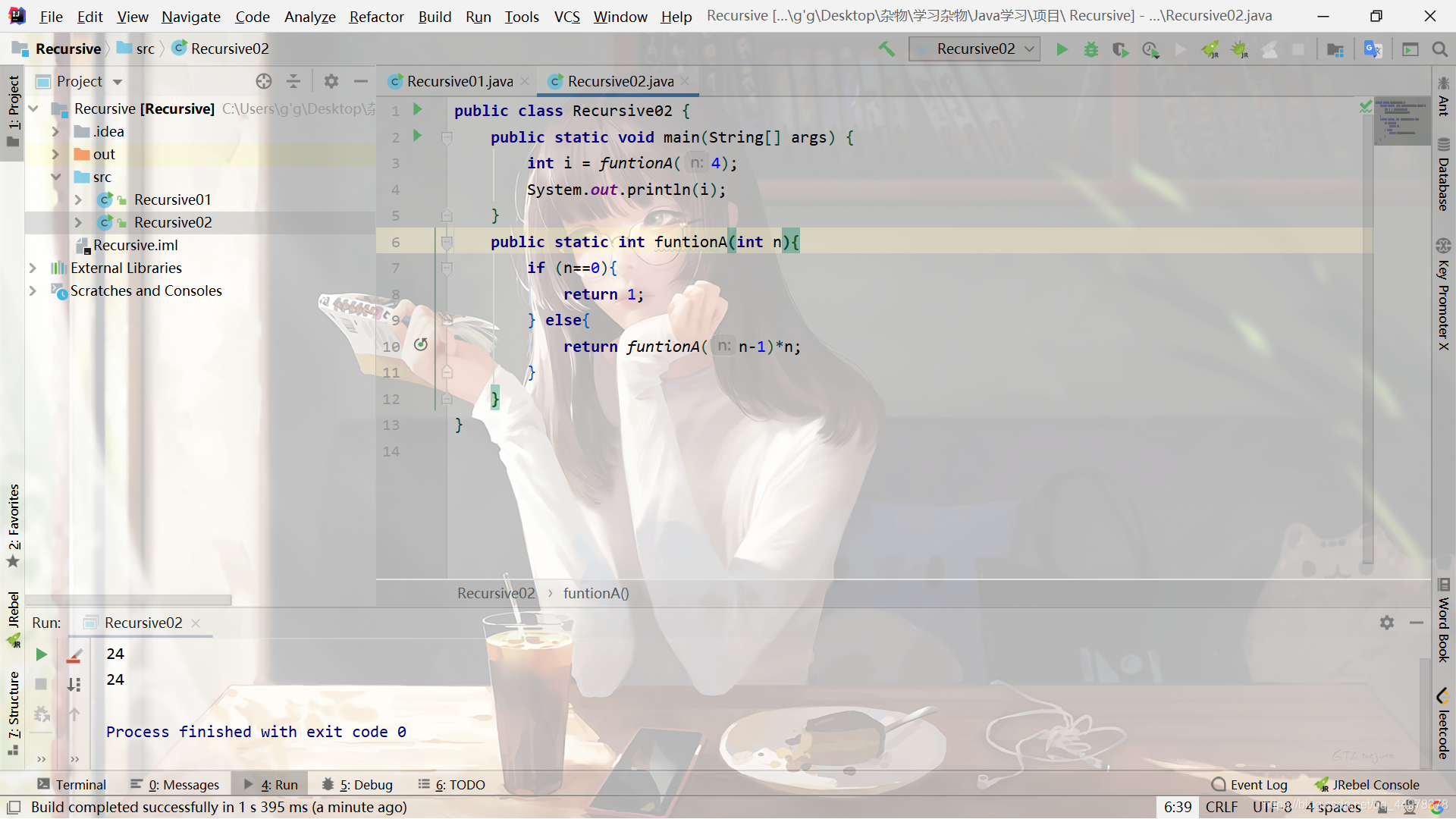
public class Recursive02 {
public static void main(String[] args) {
int i = funtionA(4);
System.out.println(i);
}
public static int funtionA(int n){
if (n==0){
return 1;
} else{
return funtionA(n-1)*n;
}
}
}

在这里插入图片描述

<5>一个人赶着鸭子去每个村庄卖,每经过一个村子卖去所赶鸭子的一半又一只。这样他经过了n个村子后还剩两只鸭子,问他出发时共赶多少只鸭子?经过每个村子卖出多少只鸭子?

思考:

image-20201008205509063

做法:

1
2
3
4
5
6
7
8
9
10
11
12
13
14
15
16
17
18
19
20
21
22
23
public class Recursive03 {
public static int count(int n){//n表示第几个村子
int sum=2;//鸭子总数剩两只
if(n==4){
return 2;//第n+1天没有交易之前还剩两只鸭子
}
else{

sum=(count(n+1)+1)*2;//n+1天之前每天的交易前的鸭子总数为交易后所剩的数目加一乘以二

}
return sum;

}

public static void main(String []args){

for (int i=1;i<4;i++){
System.out.println("第"+i+"天的村子交易前有"+count(i)+"只鸭子,当天村子卖出"+(count(i)/2+1)+"只.");

}
}
}

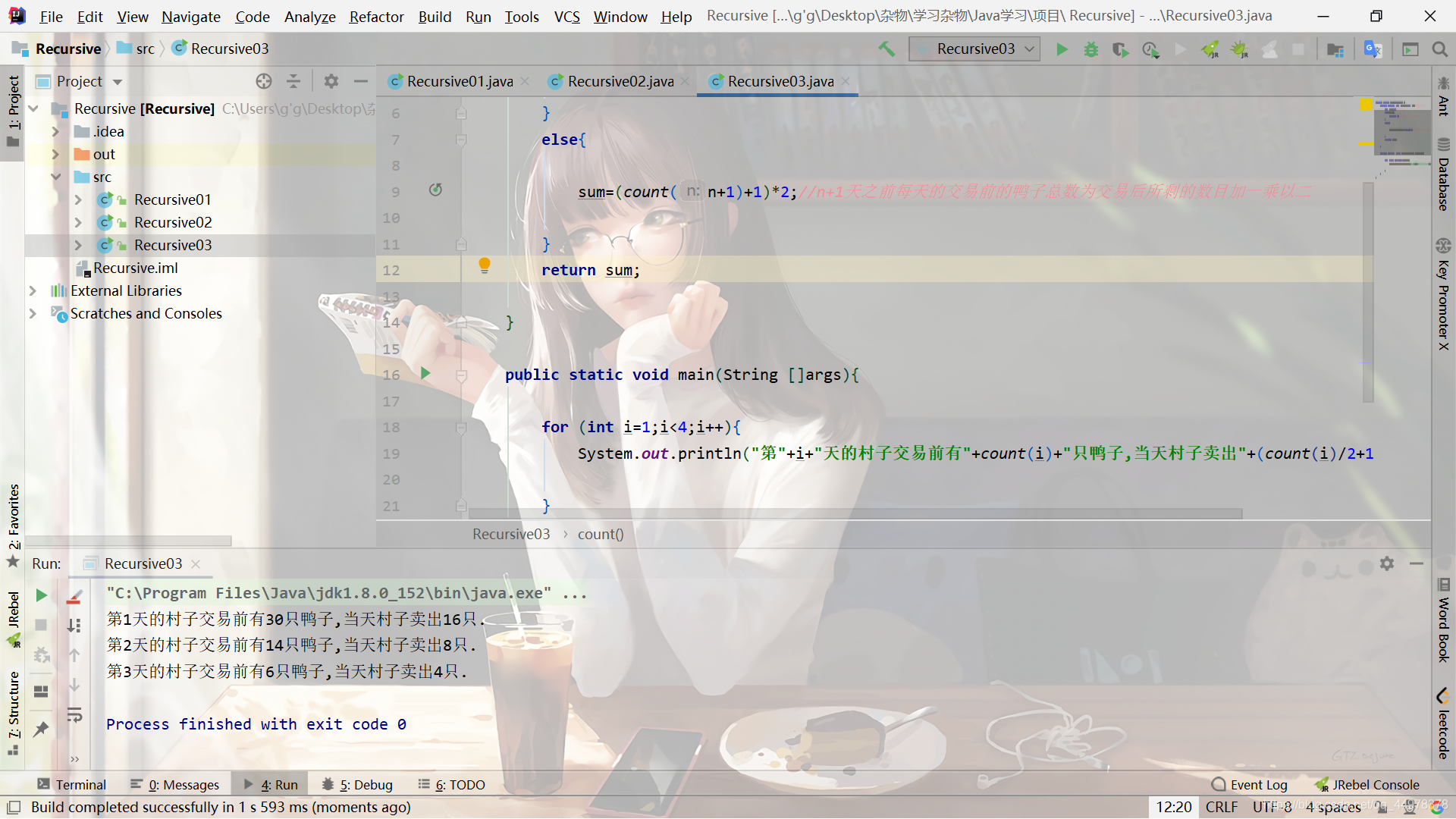
运行结果:

在这里插入图片描述

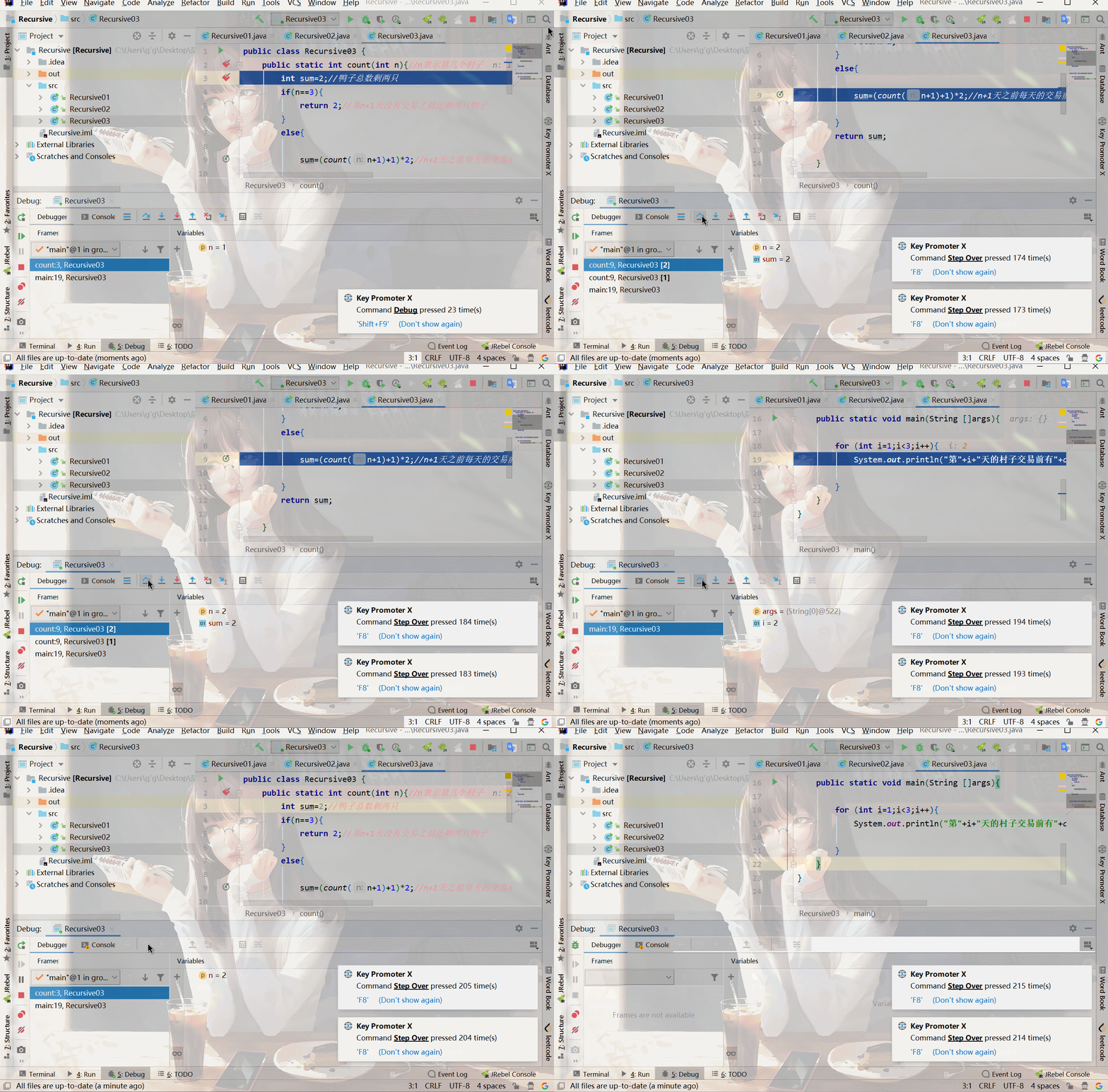
我们来看一下执行步骤:

在这里插入图片描述

-------------------本文结束 感谢您的阅读-------------------